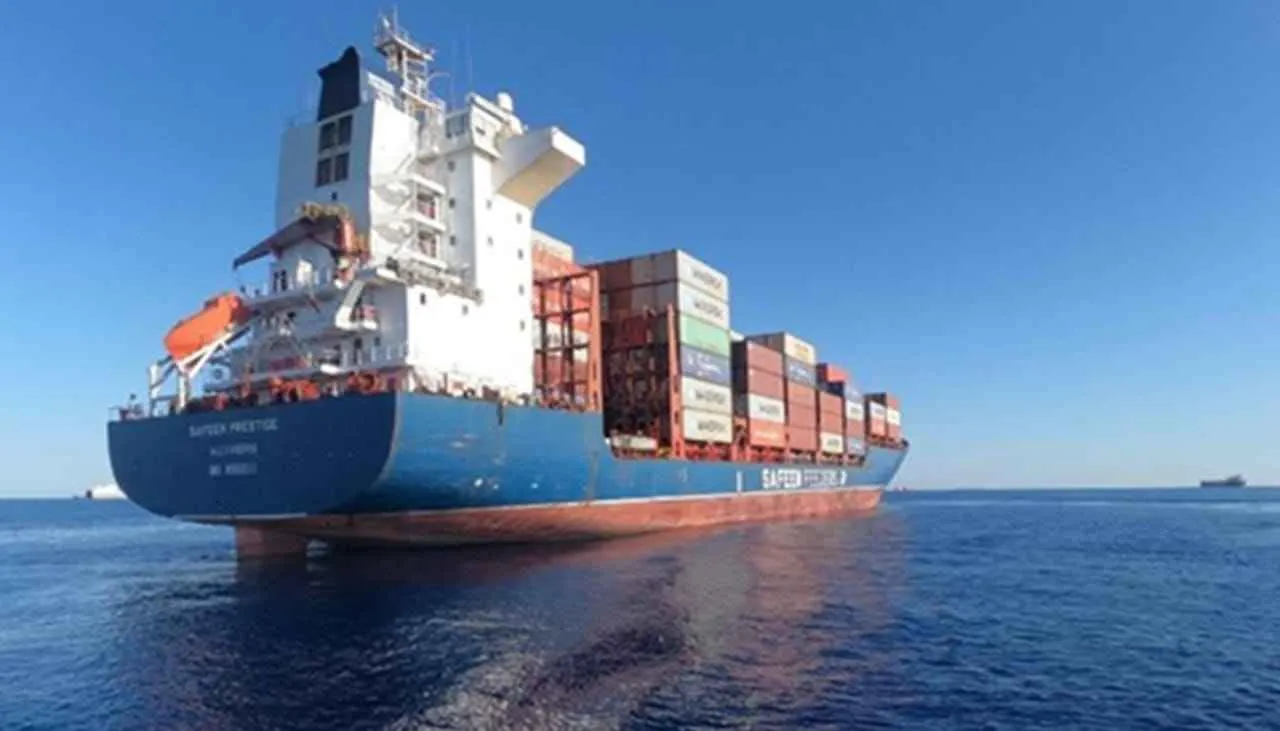

The Strait of Hormuz remains eerily quiet and that tells you everything about the gap between a social media post and reality on the water. Donald Trump told the world to start their engines and let the oil flow after announcing a deal with Iran on Sunday. Ship tracking data reveals a very different picture and the numbers are almost embarrassing when you line them up against the rhetoric.
You May Like

MarineTraffic data analysed by Source shows just seven vessels have actually passed through the critical waterway since the announcement. Meanwhile about 580 ships appear to be stuck waiting inside the Gulf with nowhere to go and no clear signal that it is safe to move. The strait normally handles roughly a fifth of global oil and gas supplies but right now it is essentially a parking lot full of tankers and cargo ships idling near export terminals in Saudi Arabia and Iraq and the UAE.
Naveen Das who is a senior oil analyst at Kpler laid out what the first sign of life would look like. He said you would expect an exodus of vessels that have been trapped inside the Gulf to start moving the moment traffic picks up. That exodus is nowhere to be seen and the silence from the water is louder than any press conference.
The reasons are not mysterious if you have been paying attention to what happened since late February when Tehran effectively shut the strait down following US and Israeli strikes. Iran started firing on ships that attempted to cross without permission. The US responded with its own naval blockade on Iranian ports in April and Central Command confirmed it disabled nine non compliant vessels including using Hellfire missiles on engine rooms. Captains have long memories and nobody wants to be the test case for whether the shooting has really stopped.
Satellite images from 15 June still show four US warships positioned near the blockade line at the entrance to the Gulf of Oman. Trump mentioned immediate removal of the blockade on Sunday but later clarified it stays until the deal gets signed. So the guns are still there and the captains can see them. Martin Kelly from EOS Risk Group put it bluntly by saying it would take an extremely brave captain to transit through the strait right now. Bravery and commercial shipping do not usually go together when the cargo is worth millions and the crew have families.
Michelle Wiese Bockman from Windward Maritime Intelligence pointed to the whiplash from early April as a reason for the current hesitation. Iran declared the strait fully open and within a day more than 33 vessels were forced to reverse course mid transit while several reported incoming fire. That kind of bait and switch stays lodged in the mind and it will take more than a Truth Social post to erase it. Das noted some Greek companies with higher risk appetite might test the waters first and if they get through safely then confidence could slowly rebuild. But nobody wants to be first and everyone is watching everyone else.
Then there are the mines. Iran threatened early in the conflict to place various types of sea mines including floating ones that can be released from the coast according to its semi official Fars news agency. Joint Maritime Information Center and Oman both issued warnings about floating objects suspected to be mines and Marco Rubio told a Senate committee that Iran mined large segments of Hormuz. Clearing those is not a weekend job. Phillip Belcher from the International Association of Independent Tanker Owners said the timeline is completely unknown and that lack of clarity is deeply concerning. Estimates range from 30 days to six months depending on how thick the field turns out to be.
Minesweepers have to crawl at two or three knots to survey the underwater environment properly and then they need to clear a channel wide enough for two way traffic. The UK and France have already sent naval vessels to the region in anticipation of a mine clearing operation. RFA Lyme Bay a British support ship fitted with mine hunting kit was spotted on tracking near RAF Akrotiri in Cyprus yesterday. Keir Starmer pledged the UK will play its full part in getting the strait reopened as soon as possible. But soon is a relative term when you are talking about floating explosives.
The toll situation adds another layer of confusion. Vessels have historically passed through the strait for free since it is a natural waterway through territorial waters. Iran spent the conflict asserting sovereignty over the strait by establishing the Persian Gulf Strait Authority to manage safe passage permits something the US and Gulf allies repeatedly rejected. Trump announced the strait would open toll free but Fars news agency reported the deal would ultimately have Iran managing the waterway in coordination with Oman and possibly introducing service fees. Nobody knows what services those fees would cover or who would collect them or how enforcement would work.
Das pointed out that any new payment system adds another spanner into the works and could create a logistical chokehold that limits how many ships pass through daily. Dimitris Ampatzidis from Kpler summed it up by saying the strait may reopen quickly from a political or security angle but the commercial shipping system normalises gradually. The captains and the owners and the insurers all need to see a pattern of safe passage before they queue up. Right now there is no pattern and there is no queue. Just a lot of stationary blips on a screen and a tweet that aged badly.
Place Your Ads Here
Reach users who follow international and global news. Ideal for international brands, global campaigns, and foreign products.
Place Your Ads Here
Reach users who follow international and global news. Ideal for international brands, global campaigns, and foreign products.
Place Your Ads Here
Reach users who follow international and global news. Ideal for international brands, global campaigns, and foreign products.